
Whose rules apply when a LitBuy parcel goes wrong
One LitBuy help article quietly decides a lot: it splits every route into self-operated and non-self-operated, and the split decides whether LitBuy's standard or the carrier's applies to your claim.
The two groups in help 30
Help 30, "Logistics Platformization Description", has a section on the relationship between LitBuy and its logistics providers. On self-operated routes, it says, LitBuy cooperates deeply with the carrier, which gives it stronger control and monitoring; if a package runs into trouble, LitBuy's after-sales standards apply, and LitBuy calls them superior to the carrier's compensation.
Non-self-operated routes are run by providers LitBuy has selected and onboarded. When a package on one of these runs into trouble, LitBuy can apply for compensation on the provider's side for you, and the exact outcome depends on that provider's compensation policy. Same parcel, same damage, two different rulebooks.
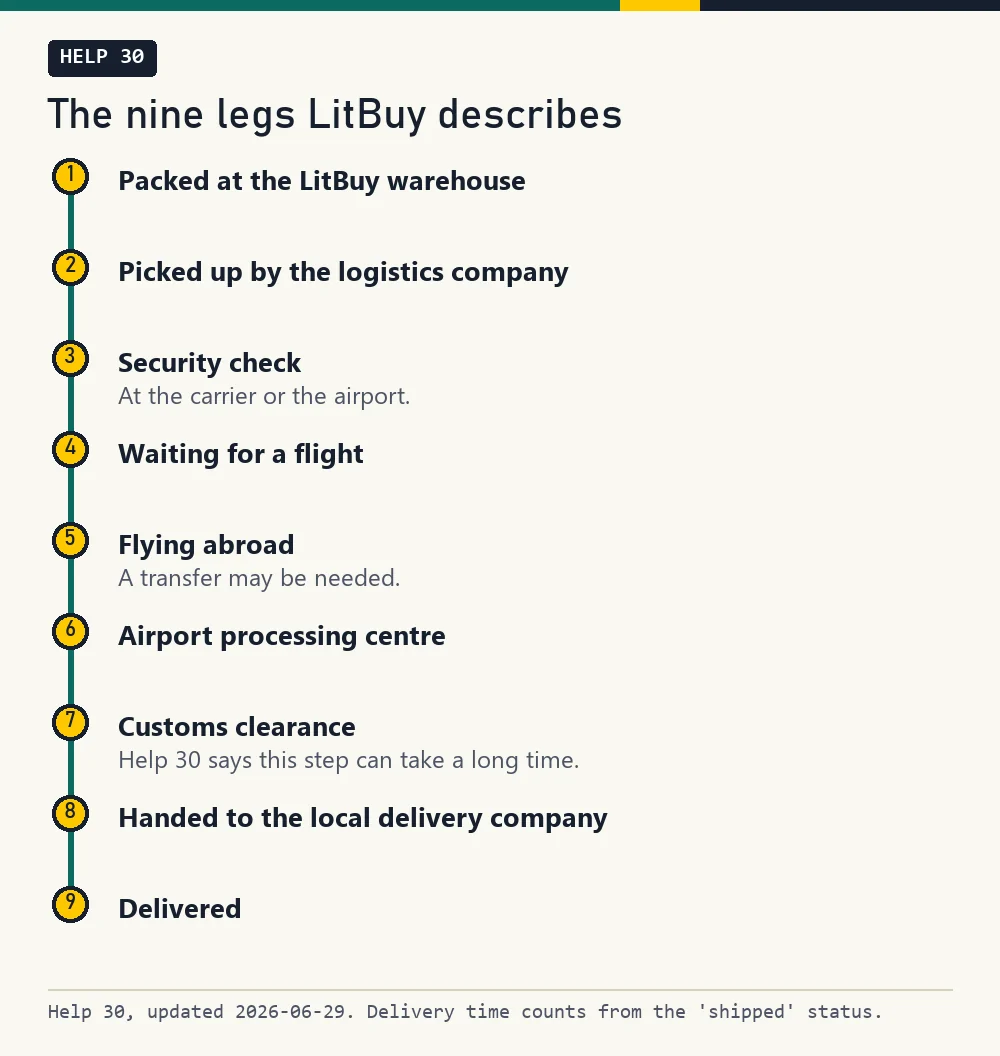
Which group is a given route in
No LitBuy page we read answers this route by route. The estimator shows names, windows, limits and tags, but no self-operated flag. Help 30 describes the groups without naming members. It would be easy to assume that routes named LIT- are self-operated because they carry LitBuy's name; nothing published supports that, and we do not assume it.
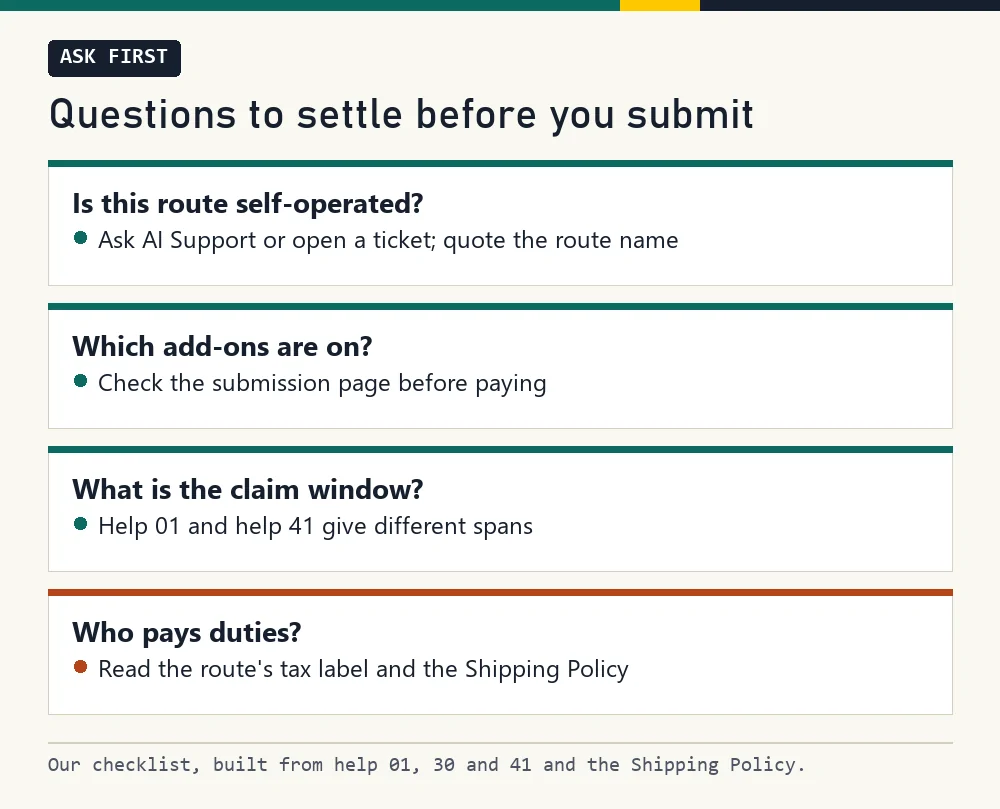
The practical answer is to ask. Use AI Support or a ticket after login, quote the full route name exactly as the parcel page shows it, and keep the reply. That reply is worth more than anything a guide can infer.
Where help 41 says no compensation applies
Help 41, "Insurance and compensation", covers delay, damage and loss. On delay it is short: most major couriers publish no delay compensation standard, so no compensation is available for delayed shipments at this time. Damage and loss are compensated to your LitBuy balance under LitBuy's Insurance Compensation Standards, after verification by customer service.
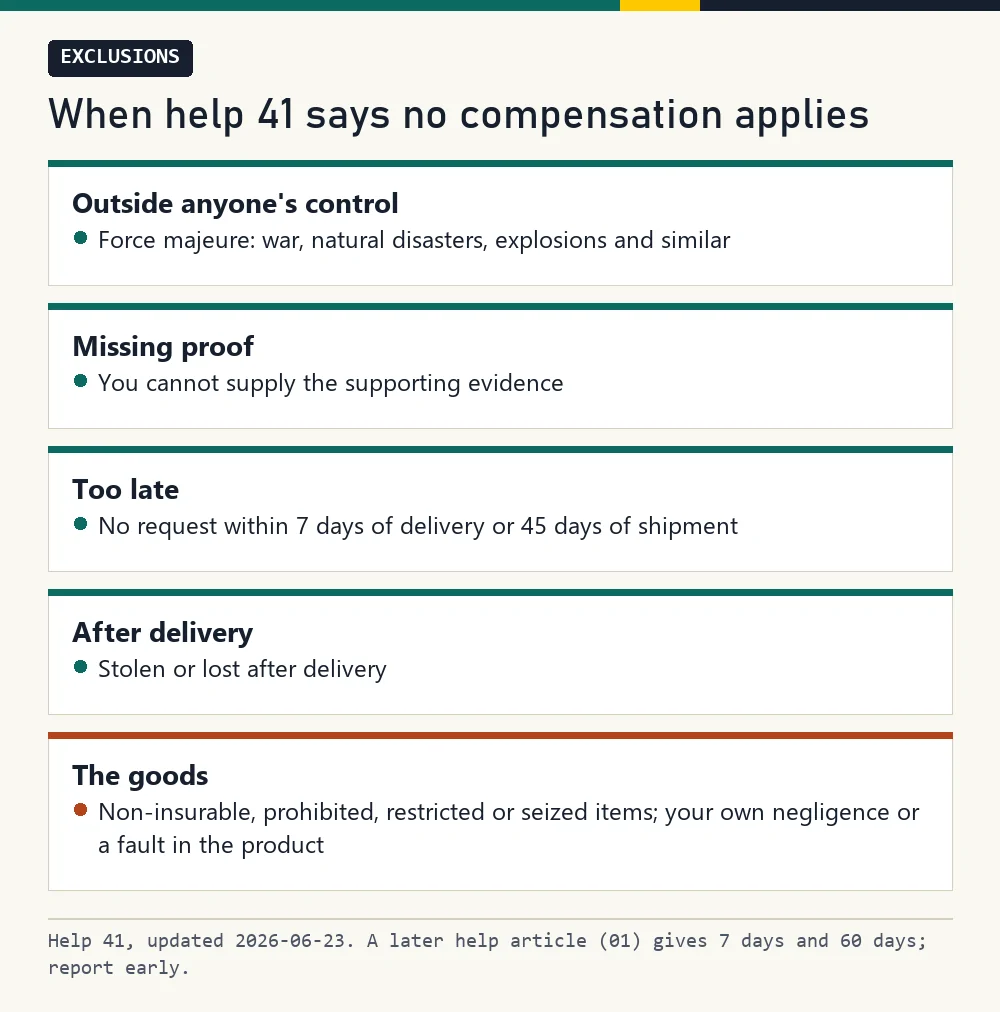
It then lists when LitBuy will not compensate: force majeure, missing supporting evidence, a request that comes later than a week from delivery or 45 days from shipment, theft or loss after delivery, goods that are non-insurable, prohibited, restricted or seized, and damage caused by the customer, or by a fault in the product. The standards table it refers to is not public.
Two claim windows on two pages
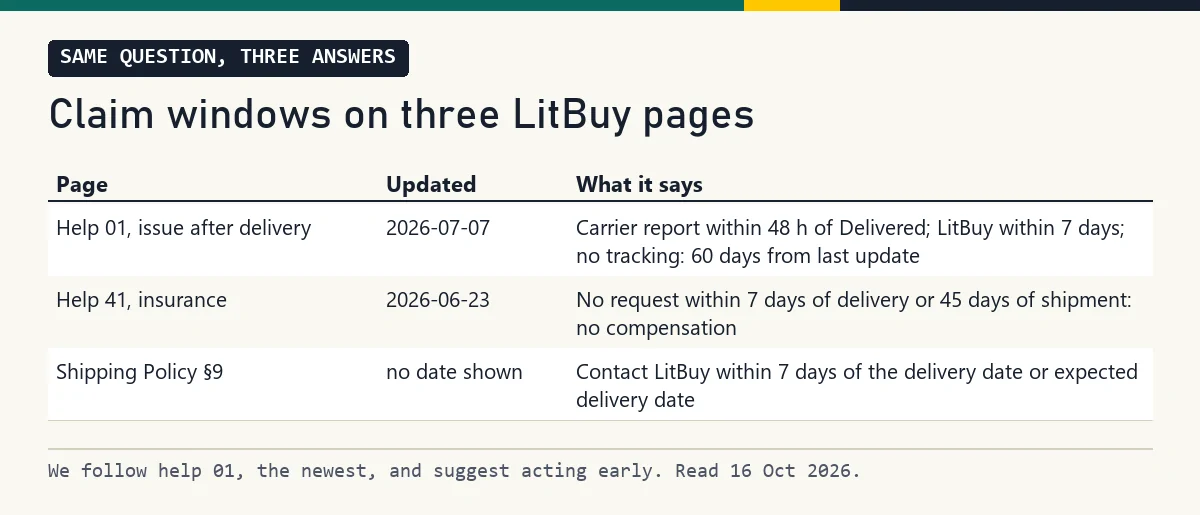
Help 41 gives a week from delivery, or 45 days from shipment. Help 01, updated on 7 July 2026 and so the newer page, sets it out in steps: report to the local carrier within 48 hours of a "Delivered" status and get a damage report or case number, then contact LitBuy within 7 days for damage, wrong or missing items or a parcel shown as delivered but not received, or within 60 days of the last tracking update for a parcel with no movement.
The footer Shipping Policy says 7 days from the delivery date or expected delivery date. Our reading: follow help 01, the newest, and act early, because older LitBuy pages give shorter spans.
Three paid add-ons offered at submission
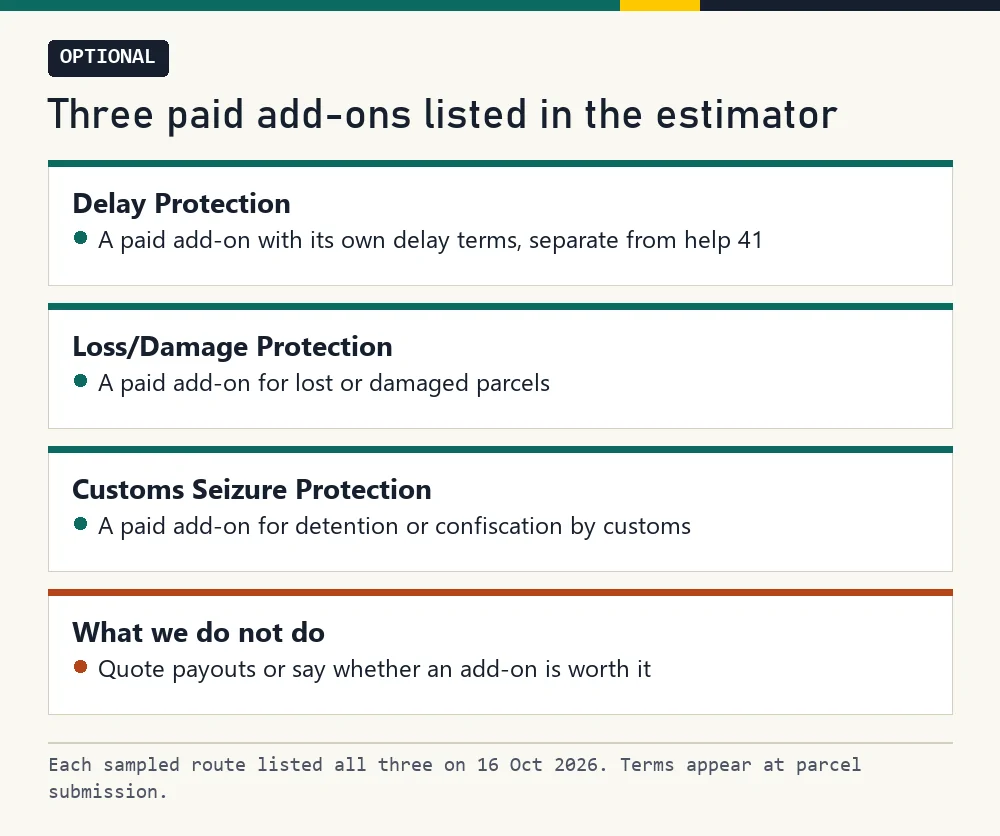
Every route in our sample listed three optional add-ons: Delay Protection, Loss/Damage Protection and Customs Seizure Protection. Each carries its own terms in the estimator response and is described there as a paid value-added service.
This sits awkwardly next to help 41's line that delay is not compensated. Both can be true at once: help 41 describes the default, and the add-on is something you buy on top. We do not quote the add-on payouts or say whether one is worth buying; read its terms on the parcel page, where they appear before you pay.
Delivery estimates are estimates
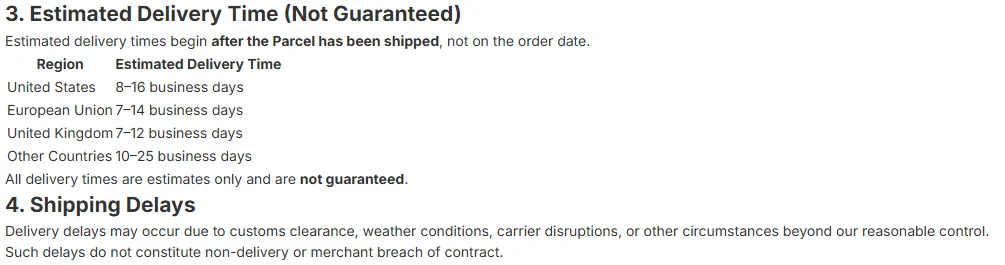
LitBuy's Shipping Policy gives regional estimates counted from shipment, not from the order: 8 to 16 business days to the United States, 7 to 14 to the European Union, 7 to 12 to the United Kingdom and 10 to 25 elsewhere, all marked not guaranteed. Orders are processed in 1 to 3 business days.
It adds that delays from customs, weather or carrier disruption do not count as non-delivery, and that parcels in transit, delayed or in customs are not eligible for refunds. For a named route, the estimator window is the better guide; for a region, the policy.
Customs and who pays
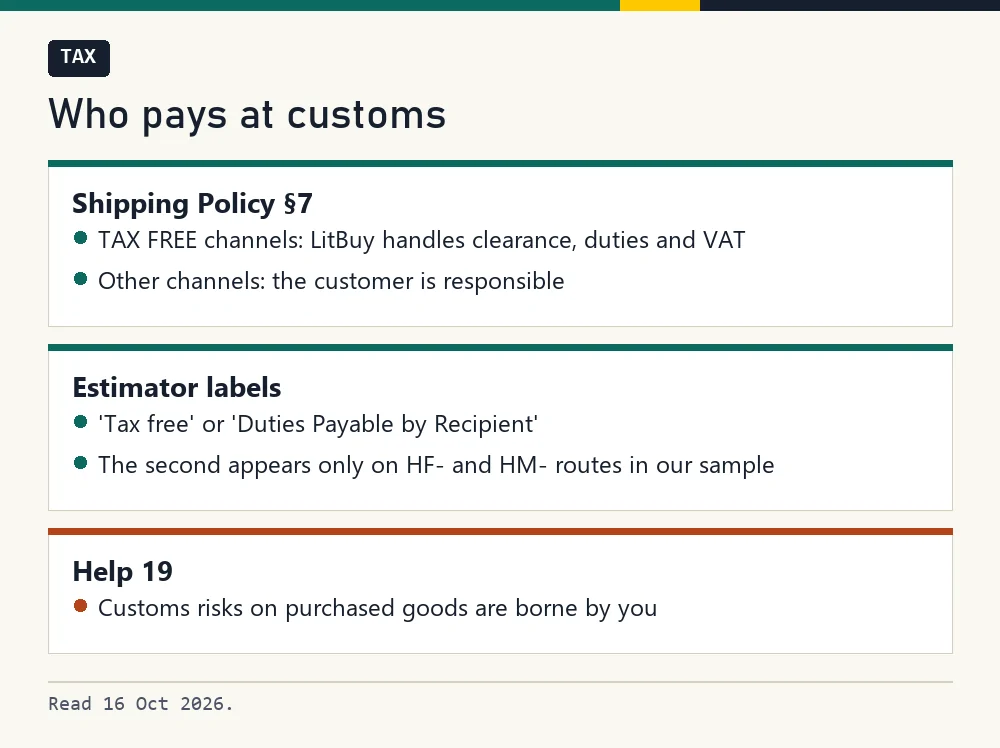
Section 7 of the Shipping Policy says parcels on TAX FREE channels have customs clearance, duties and VAT handled and paid by LitBuy, and that on all other channels the customer is responsible. The estimator labels each entry "Tax free" or "Duties Payable by Recipient"; in our sample the second label appears only on EMS, ETK and EUB routes whose names start HF- or HM-.
Help 19 adds that customs risks on purchased goods, such as returns, fines or taxes, are borne by the buyer. How the tax column and the EU €3 notice fit together
Next stop on this map: Reading a route card