
LitBuy Spreadsheet categories, read with the parcel in mind
Sixteen shelves of finds, ordered from bulky and light to small and dense, because that is roughly how they behave once they are boxed.
Sixteen shelves to start a route from
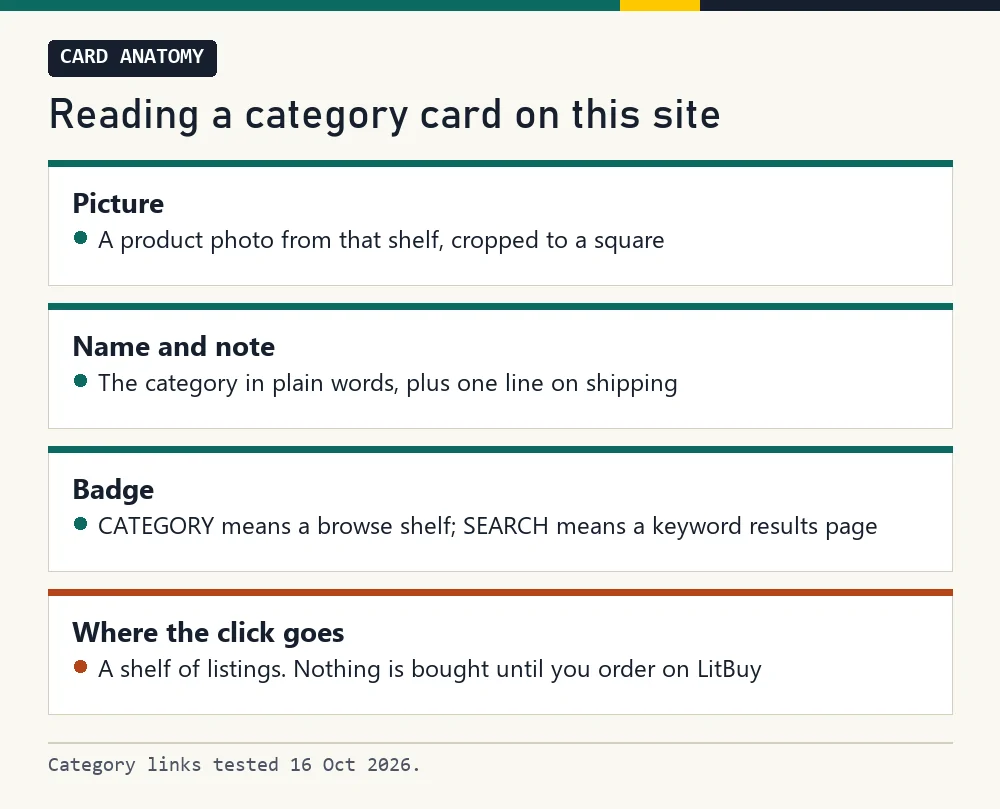
Browse by category: each card opens a shelf of product listings. Women's picks is a keyword search rather than a single shelf, and its badge says so.
 OuterwearBulky: the box size can bill more than the scaleCategory
 HoodiesSoft and squashable, so packing mattersCategory
 SneakersShoe boxes add volume; ask about removing themCategory
 BagsStructured bags hold their shape in the boxCategory
 JeansCheck the packed weight and dimensionsCategory
 SweatpantsCheck material, size and parcel limitsCategory
 T-shirtsConfirm the packed weight and sizeCategory
 Sports jerseysCheck size, printing and parcel limitsCategory
 WomenswearA keyword search, not a single shelfSearch
 HatsCrushable crowns: say so in your parcel noteCategory
 BeltsSmall, but metal buckles add gramsCategory
 EyewearFragile: hard cases change parcel sizeCategory
 JewelleryTiny items; declare them like the restCategory
 WatchesSome carry batteries, which narrows routesCategory
 ElectronicsBatteries and magnets cut the route listCategory
 PerfumeLiquids are barred on several LIT- routesCategory
Four parts of a category card
A card has four parts: a square photo taken from that shelf, a plain name, one line about shipping, and a badge. "Category" means a browse shelf with filters; "Search" means a results page for a keyword.
Clicking a card buys nothing and creates no order. It shows listings with seller links. When one looks right, you copy the link into LitBuy, and LitBuy places the order with the seller on your behalf.
The note line is the part you will not find on other finds pages. It is there because the item type affects the parcel: a coat is light but large, so its box size may bill more than its weight; a speaker may carry a battery and lose access to some routes.
Categories that meet route limits
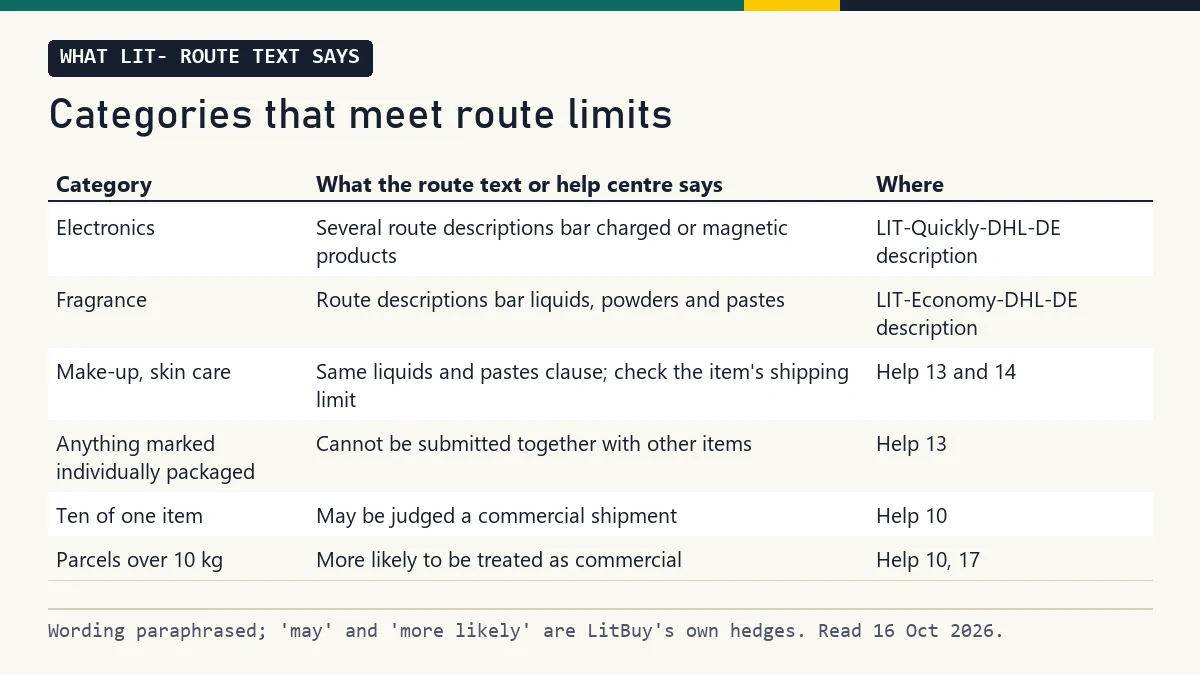
Route descriptions in LitBuy's estimator spell out what a route will not carry. Both German LIT- routes, for example, say charged or magnetic products, liquids, powders and pastes are not accepted. Help 13 and help 14 explain the mechanism: staff set a shipping limit on each item when it arrives, and the parcel page only offers routes that accept every item in the parcel.
So a fragrance or a power bank in the same parcel as three hoodies can shrink the route list for all of them. Help 10 adds two cautions in LitBuy's own soft wording: many copies of one item may be judged a commercial shipment, and parcels over 10 kg are more likely to be. We repeat the hedges as written; they are not hard rules.
Reading a listing before the parcel exists
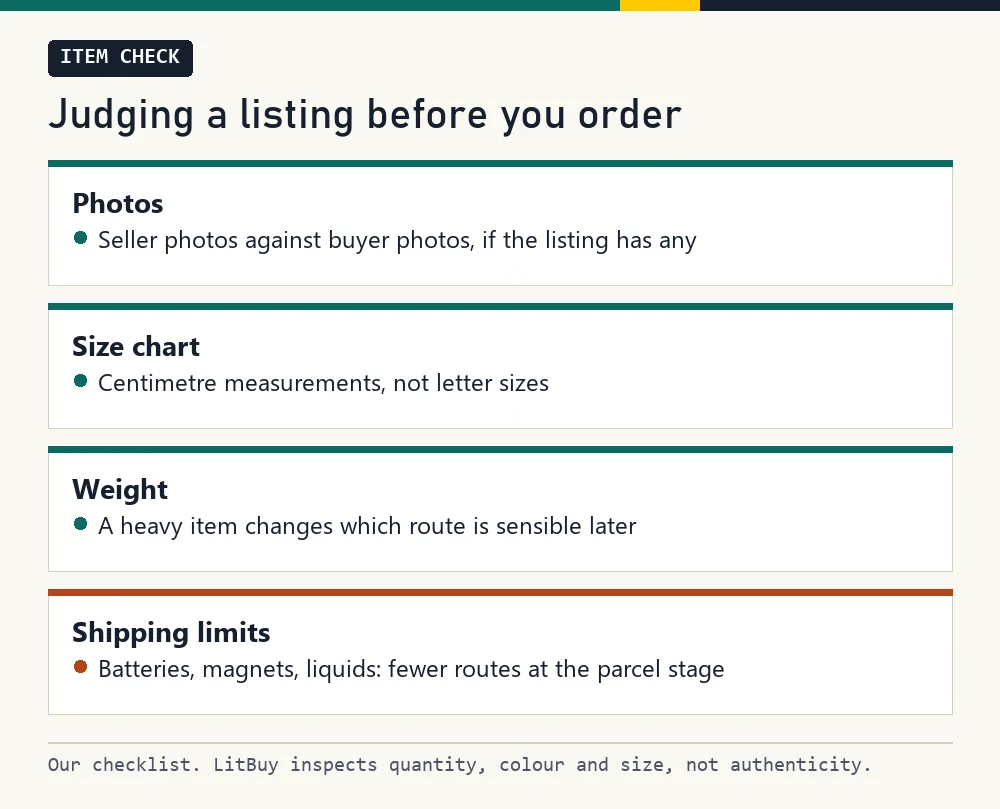
Judging a listing before you order starts with the photos. Start with them, and give buyer photos more weight than studio shots when a listing has both. Read the size chart in centimetres and compare it with something you own; letter sizes drift between sellers.
Think about weight early. A pair of boots or a heavy coat will push the parcel into a different price band, and on routes that bill by volume a bulky item can cost more than its scale weight suggests. Finally, check whether the item is the kind that gets a shipping limit: anything with a battery, a magnet or a liquid.
The listing supplies the details a route search needs
Start with the exact item and option: size, material, quantity and any battery, liquid or fragile component. Open the seller page and save the selected price and relevant dimensions. A generic category name can conceal features that affect shipping. Matching product photos from different shops do not establish matching specifications.
The Spreadsheet helps discovery, while the agent purchases and receives the chosen goods. A country appearing on a campaign board does not confirm that this particular basket can travel on a particular line. Before purchasing an unusual item, ask about acceptance and available onward options. Use the actual contents and destination later in the estimator rather than treating a past sample result as approval.
Seller signals worth reading
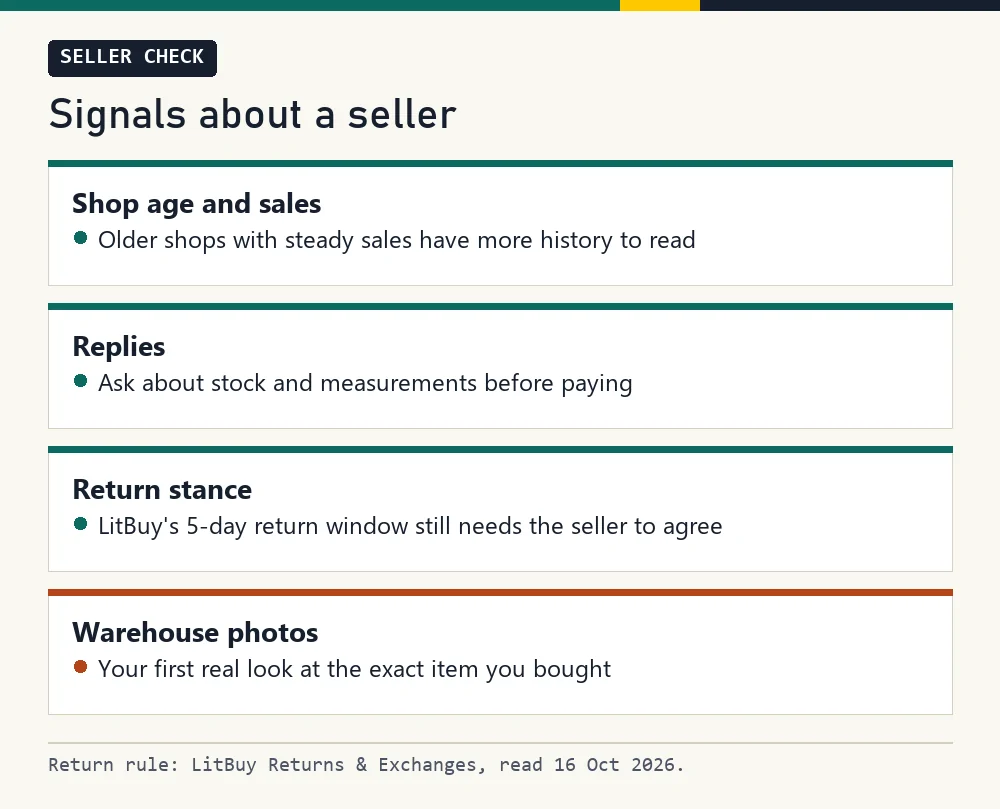
Good sellers leave a trail. Shops with a longer history and steady sales give you more to read, and a seller who answers questions about stock and measurements before you pay is easier to deal with after. If something about size or colour matters, write it in the order remark so the buyer has it in front of them.
Returns matter more than people expect. LitBuy's Returns & Exchanges policy allows a return request within 5 days (120 hours) of an item being marked "Warehoused", but the seller has to agree and the item has to be unused and resaleable. The warehouse photos are your first real look at the exact item, so read them on the day they arrive.
Why the shelves are in this order
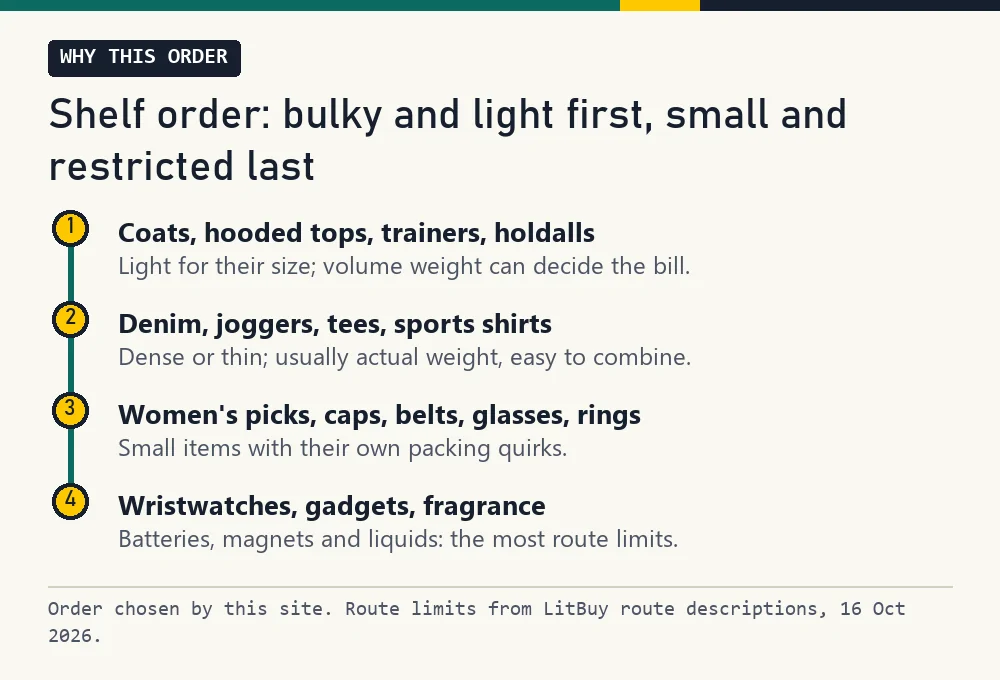
Most finds pages sort categories alphabetically or by popularity. These are sorted by how the goods tend to behave once boxed. Coats, hooded tops, trainers and holdalls come first because they are light for their size; on routes that bill the greater of actual and volume weight, the box can cost more than the scale suggests. Denim, joggers, tees and sports shirts follow: dense or thin, usually billed on actual weight and easy to combine.
Small items close the list, and the last few carry the most route restrictions. Watches may carry batteries, gadgets carry batteries and magnets, and fragrance is a liquid. Several LIT- route descriptions refuse all three, so these are the shelves where the route question arrives earliest.
Once you have a listing, the rest happens on LitBuy: paste the link, choose colour and size, pay the item and the seller's domestic shipping, and wait for the warehouse. Create a LitBuy account (partner invite code) · Read the step-by-step guide first
Next stop on this map: Lit Line country board